
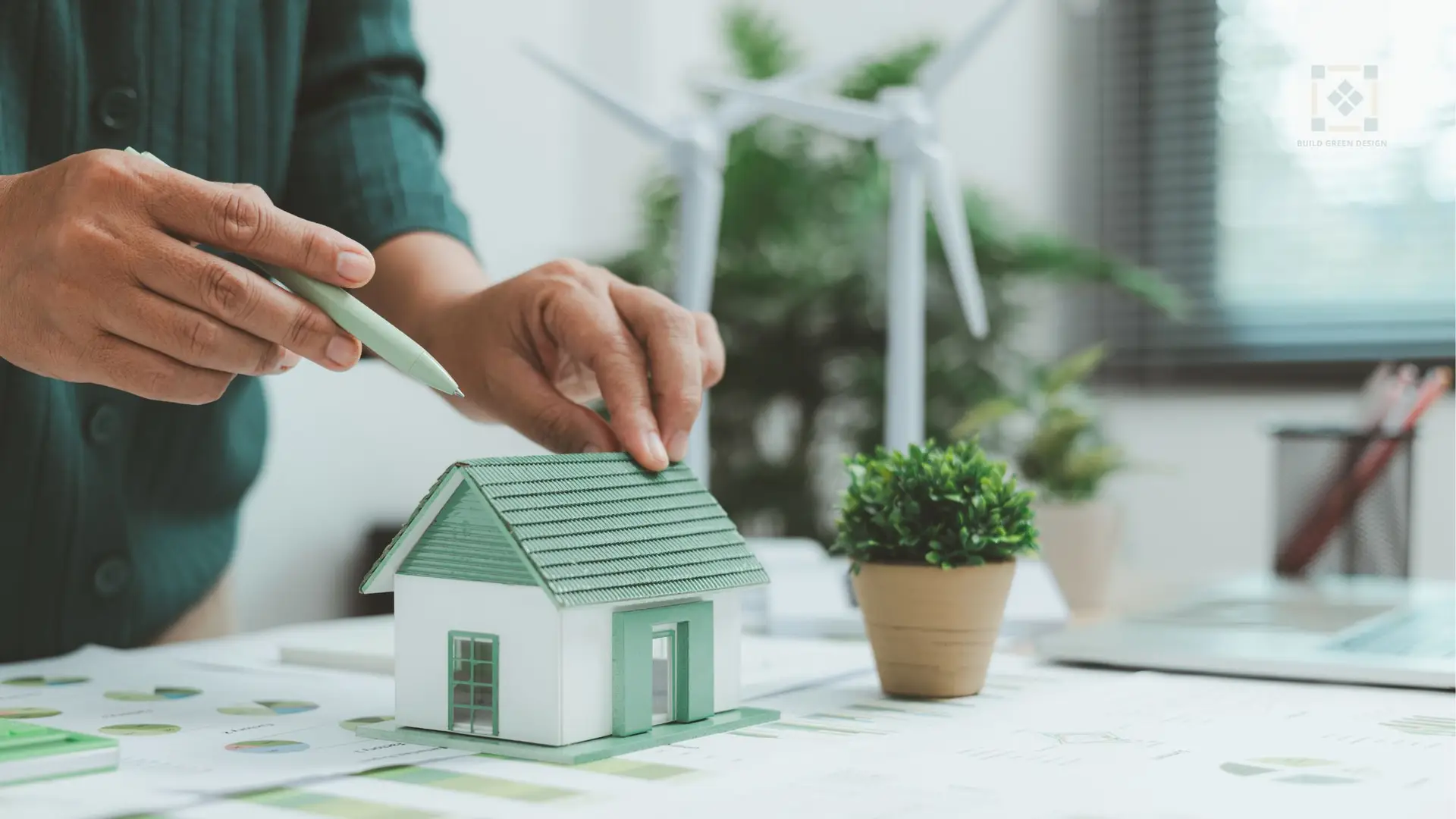
Designing an energy-efficient home in Delhi requires a deep understanding of the region’s composite climate — extreme summers exceeding 45°C, cool winters, monsoon humidity, and high dust levels. Without climate-responsive planning, homes become heavily dependent on air-conditioning and artificial lighting, leading to high energy bills and poor indoor comfort.
A well-designed sustainable home in Delhi can reduce cooling energy demand by 30–50% while significantly improving indoor air quality and thermal comfort.
1. Start with Climate-Responsive Orientation
The most critical design decision is building orientation. In Delhi’s climate, the west and south-west facades receive intense afternoon heat, which increases indoor temperatures.
Best practices include:
- Minimizing large windows on the west side
- Orienting longer building faces towards north and south
- Locating living areas on the north or east side
- Using buffer spaces like staircases or toilets on the west
Example:
Independent homes in South Delhi that reduce west-facing glazing and add shaded verandahs report noticeably lower indoor temperatures during peak summer afternoons.
2. Reduce Heat Gain Through Shading & Envelope Design
Solar heat gain through walls, roofs, and windows is the biggest contributor to overheating.
Effective strategies:
- External shading devices (chajjas, louvers, pergolas)
- Double-glazed or low-E windows
- Insulated walls (AAC blocks, cavity walls)
- High-performance building envelope
Example:
A residence in Gurugram using AAC blocks and deep window overhangs reduced AC usage by nearly 4–5 hours per day during May–June.
3. Optimize Roof Design — The Largest Heat Source
Roofs in Delhi receive maximum solar exposure. A poorly designed roof can increase indoor temperature by 3–5°C.
Recommended solutions:
- Cool roof tiles or reflective paint
- Terrace garden or green roof
- Roof insulation boards
- Pergola or solar panel shading
Example:
Homes using reflective roof coatings in Delhi have recorded up to 15–20% reduction in top-floor cooling load.
4. Maximize Natural Ventilation
Cross ventilation helps flush out hot air and improves comfort without mechanical cooling.
Design considerations:
- Windows on opposite walls
- Stack ventilation through stairwells or skylights
- Ventilated jaalis or high-level openings
- Courtyard planning for airflow
Example:
Traditional courtyard homes in Old Delhi remain cooler because hot air rises and escapes, pulling in fresh air from lower openings.
5. Use Daylighting to Reduce Artificial Lighting
Good daylight design reduces electricity consumption and improves well-being.
Techniques:
- North-facing windows for glare-free light
- Light shelves to bounce daylight deeper indoors
- Skylights with shading
- Open-plan layouts
Homes designed with proper daylighting can reduce daytime lighting usage by 50–70%.
6. Choose Energy-Efficient Materials
Material selection directly impacts thermal performance.
Recommended materials:
- AAC blocks or fly ash bricks
- Stone cladding for thermal mass
- Lime plaster or breathable finishes
- Low-VOC paints for indoor air quality
These materials reduce heat gain and improve indoor comfort naturally.
7. Integrate Renewable Energy
Solar energy is highly viable in Delhi due to abundant sunlight.
Options include:
- Rooftop solar PV systems
- Solar water heaters
- Solar-powered outdoor lighting
A typical 3–5 kW rooftop solar installation can offset 40–60% of household electricity consumption.
8. Improve Water Efficiency
Energy efficiency and water efficiency go hand-in-hand.
Include:
- Low-flow fixtures
- Dual flush systems
- Rainwater harvesting
- Greywater reuse for landscaping
This reduces both water bills and pumping energy.
9. Address Dust and Air Quality
Delhi’s air quality makes filtration and design equally important.
Design solutions:
- Landscaped buffers
- Entry vestibules
- Operable windows with mesh
- Indoor plants and air filtration zones
This improves indoor air quality while maintaining ventilation.
The Result: Lower Bills, Better Comfort, Future-Ready Home
By integrating these strategies, homeowners in Delhi can:
✔ Reduce electricity consumption
✔ Lower AC dependency
✔ Improve indoor comfort year-round
✔ Enhance indoor air quality
✔ Increase property value
✔ Future-proof against rising energy costs
How Build Green Design Helps Avoid Common Energy Efficiency Pitfalls
While many homeowners aim to build energy-efficient homes, critical mistakes during planning and construction often limit actual performance. This is where an experienced sustainability-focused design team makes a significant difference.
At Build Green Design, we help clients avoid common pitfalls such as:
Incorrect Building Orientation
Homes are often designed based on plot shape rather than sun path analysis, leading to excessive heat gain. Our team performs climate-based planning to optimize orientation from the concept stage.
Overuse of Glass Facades
Large unshaded windows increase cooling loads dramatically in Delhi’s climate. We recommend the right window-to-wall ratio, glazing type, and shading strategies.
Lack of Roof Insulation
Many homes overlook roof performance, resulting in overheating of top floors. We incorporate cool roof systems, insulation layers, and solar integration strategies.
Poor Ventilation Planning
Misplaced windows reduce airflow and increase dependence on air-conditioning. Our designs prioritize cross ventilation and stack effect principles.
Material Selection Without Thermal Analysis
Choosing materials based only on aesthetics can reduce efficiency. We evaluate wall assemblies and finishes for thermal performance.
Late Integration of Solar Systems
Solar panels added as an afterthought often reduce efficiency and increase costs. We plan solar readiness during early design stages.
Our Consultative Approach
We support homeowners through:
• Climate-responsive architectural design
• Energy-efficient building envelope strategies
• Daylighting and ventilation optimization
• Material selection guidance
• Solar readiness and renewable integration
• Water efficiency planning
• Green building certification advisory (if required)
By integrating these considerations early, we help homeowners avoid costly redesigns, reduce long-term energy consumption, and create homes that remain comfortable across Delhi’s extreme seasons.