
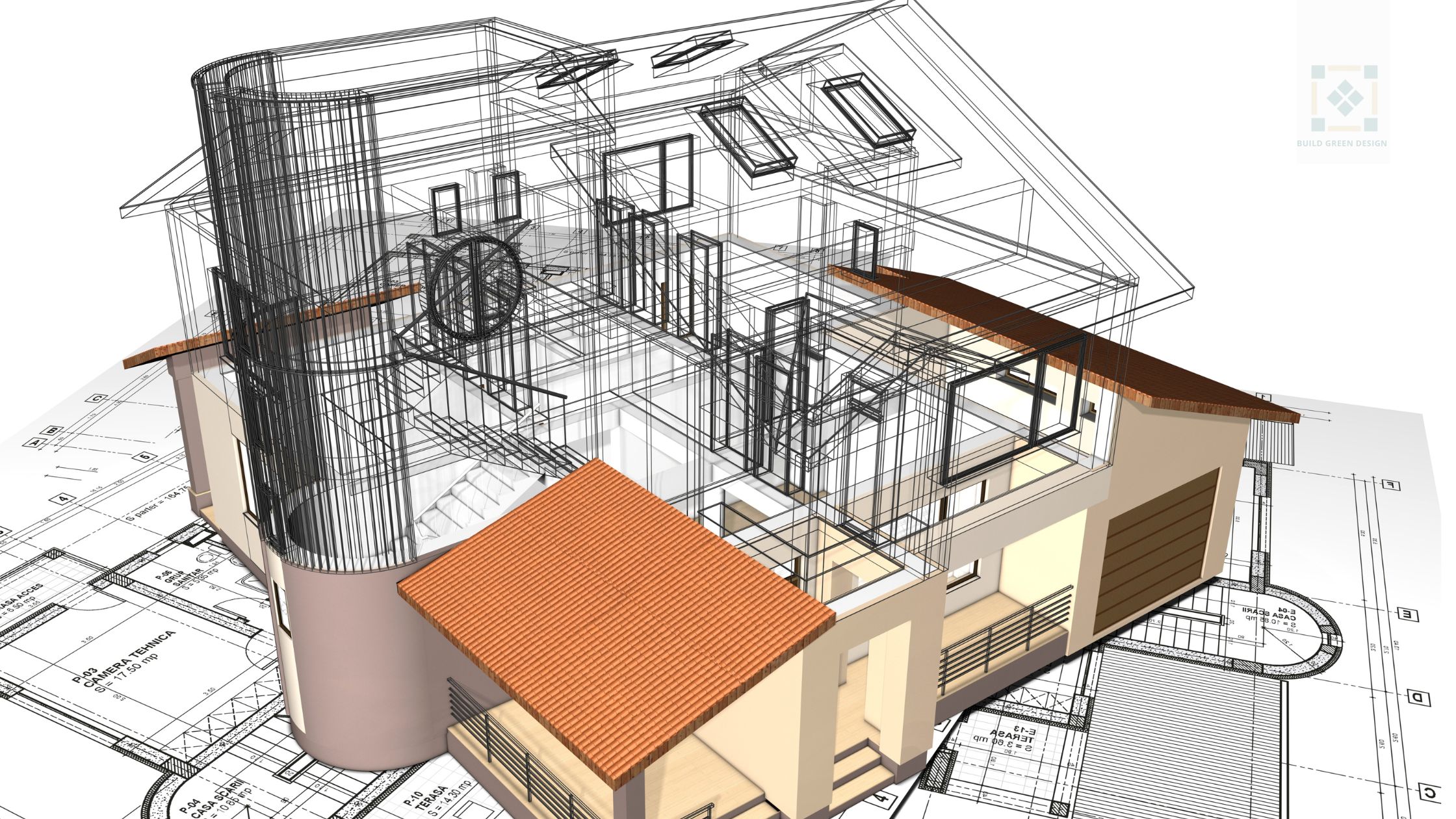
Sustainability is often assumed to increase project cost. In reality, most cost escalations happen due to design conflicts, inefficient planning, and late-stage changes. Building Information Modeling (BIM) changes this dynamic by allowing project teams to make informed, performance-driven decisions before construction begins.
BIM goes beyond 3D visualization. It creates a data-rich digital model of the building, integrating architecture, structure, and services. This allows developers, corporates, and project owners to evaluate cost, performance, and sustainability outcomes at the design stage — when changes are easiest and most economical.
1. Clash Detection Prevents Costly Site Changes
One of the biggest challenges in conventional construction is coordination between different disciplines. Structural beams, HVAC ducts, electrical trays, and plumbing lines are often designed in isolation. These conflicts only become visible on-site, resulting in rework, delays, and cost overruns.
With BIM, all systems are modeled together. Conflicts such as ducts passing through beams or service congestion in shafts are identified digitally and resolved during design. This significantly reduces execution-stage uncertainty and improves construction timelines — particularly valuable in commercial and institutional projects where coordination complexity is high.
2. Energy Simulation Before Construction
Sustainable performance is heavily influenced by early design decisions. BIM tools allow simulation of:
- Solar heat gain
- Daylight penetration
- Building orientation
- Envelope performance
- HVAC load requirements
These simulations help optimize glazing, shading devices, insulation, and façade design. Instead of oversizing HVAC systems to compensate for inefficient design, buildings can be engineered to reduce cooling loads naturally, lowering both capital and operational costs.
For corporates and developers, this means sustainability becomes a cost optimization strategy, not an additional expense.
3. Accurate Quantity Take-Offs and Reduced Material Waste
Material over-ordering and wastage are common in traditional workflows. BIM automatically generates precise quantity take-offs for concrete, steel, finishes, and façade elements. This improves procurement planning and reduces construction waste.
This accuracy also supports green building certification requirements, where documentation of material usage and environmental impact is critical. For developers managing large portfolios, this level of cost control can significantly improve project economics.
4. Lifecycle Cost Optimization
Most projects focus only on upfront construction cost. However, operational expenses over a building’s life often exceed initial capital expenditure. BIM enables evaluation of total lifecycle cost, including:
- Energy consumption
- Maintenance requirements
- Replacement cycles
- Operational efficiency
For example, selecting high-performance glazing or improved insulation may slightly increase initial cost but significantly reduce long-term energy expenses. BIM helps quantify this trade-off, allowing clients to make informed investment decisions.
5. Better Coordination for Green Building Certification
Green building certifications such as GRIHA, IGBC, LEED, and EDGE require performance-based documentation across energy, water, materials, and indoor environmental quality. BIM centralizes this information and links it directly to design elements.
Energy models, daylight analysis, and material specifications can be generated from the BIM environment itself, simplifying certification workflows. This improves accuracy and increases the likelihood of achieving higher ratings without redesign during later stages.
How BIM Is Changing Sustainable Design Decisions
Developers and corporates are increasingly using BIM to test multiple design options early — comparing façade strategies, orientation, glazing ratios, and shading systems. This allows sustainability to be embedded into the project from the start rather than added as a compliance exercise.
Coordinated BIM models also improve collaboration between architects, structural engineers, and MEP consultants. This reduces communication gaps and ensures that sustainability goals are aligned across disciplines.
Another growing advantage is improved predictability. With better coordination, accurate quantities, and performance simulations, clients gain greater cost certainty, reduced execution risks, and more reliable timelines.
Real Value for Businesses and Developers
From a business perspective, BIM-led sustainable design delivers:
- Reduced construction-stage rework
- Better cost predictability
- Optimized building performance
- Streamlined certification processes
- Lower operational expenses
- Improved asset lifecycle value
These advantages are particularly relevant for commercial offices, institutional buildings, hospitality projects, and large residential developments where long-term performance matters.
How Build Green Design Supports BIM-Led Sustainable Projects
At Build Green Design, BIM is not treated as a standalone service. It is integrated with our broader expertise in:
- Sustainable Architecture and Planning
- Green Building Certification Facilitation
- Interior Design aligned with wellness and efficiency
- Climate-responsive façade design
- Performance simulation and documentation
Our approach ensures that sustainability, cost optimization, and design coordination happen simultaneously. Clients benefit from informed decisions early in the project, when the impact on cost and performance is highest.
BIM ultimately shifts sustainability from an abstract goal to a measurable, financially sound strategy — helping organizations build smarter, more efficient, and future-ready spaces before construction even begins